
Morgan Friedrich · 12 September 2026
Exploring Schema Implementation Strategies for Enhanced Visibility in Platform Migration Scenarios
Platform migrations often involve shifts between content management systems, hosting environments, or entire digital infrastructures, and schema implementation plays a direct role in preserving search visibility throughout these transitions. Organizations track how structured data markup maintains rich results such as knowledge panels, review stars, and event listings when URLs, templates, and backend architectures change. Data from multiple industry reports shows that sites retaining consistent schema during migrations experience fewer drops in indexed pages compared to those that delay implementation until after the switch completes.
Core Schema Types Relevant to Migration Projects
Observers note that certain schema types prove especially useful when platforms undergo change because they anchor entity recognition across search engines. Organization, WebSite, and BreadcrumbList schemas help maintain site hierarchy signals while Product, Article, and FAQPage schemas preserve specific content features that drive click-through rates. Researchers at various institutions have documented cases where incomplete schema transfer led to loss of eligibility for featured snippets, prompting teams to audit markup before, during, and after migration windows. In September 2026, several search engine documentation updates emphasized expanded support for nested schema properties, which affects how migrated sites display additional information in mobile results.
Pre-Migration Audit and Mapping Processes
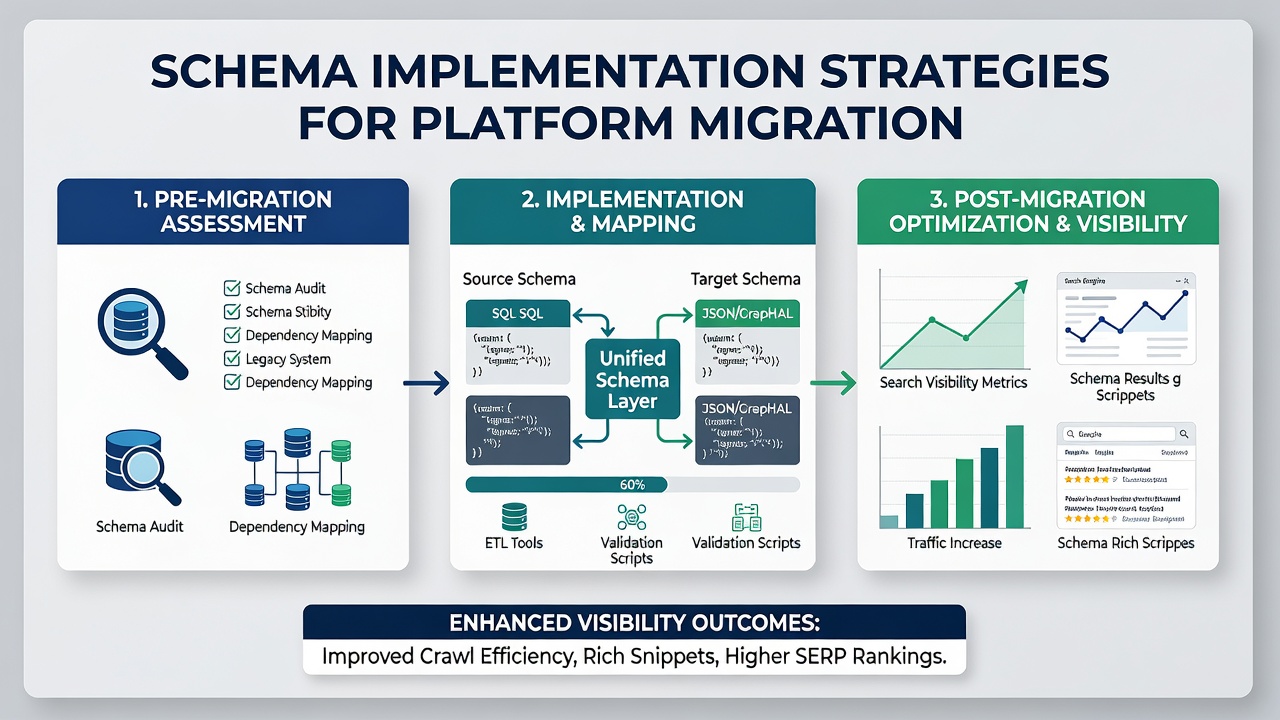
Teams begin by cataloging existing schema across all page templates and identifying which markup elements rely on dynamic data pulled from the current platform. This step includes checking for deprecated properties and verifying that JSON-LD, Microdata, or RDFa formats align with current standards. Analysts compare schema coverage against schema.org guidelines to spot gaps that could affect visibility once content moves to the new system. The process also requires mapping data fields from the old database to the new one so that schema values such as review counts, prices, and availability statuses transfer without interruption.
Implementation Approaches During Active Migration
One common method involves deploying schema in parallel on both old and new platforms for a defined overlap period, allowing search engines to index updated structures while legacy URLs still receive traffic. Another approach uses server-side rendering to inject schema dynamically based on the migration stage, which reduces manual template edits. Experts have observed that incremental rollout, starting with high-traffic sections such as product listings or blog archives, minimizes risk compared to full-site implementation on launch day. Tools that validate schema through automated testing catch syntax errors before they reach production, and logs from these tests provide records for troubleshooting any indexing issues that surface later.
Post-Migration Monitoring and Adjustment
After the platform switch stabilizes, continuous monitoring tracks changes in rich result appearances and organic impressions through search console data. Teams compare pre-migration and post-migration performance metrics for schema-enhanced pages to quantify any visibility shifts. When discrepancies appear, adjustments often involve refining property values or adding new schema types that the updated platform supports more readily. Figures from digital transformation studies reveal that sites conducting weekly schema audits in the first three months after migration recover faster from temporary ranking fluctuations than those relying on one-time checks.
Integration With Technical SEO Elements
Schema works alongside canonical tags, hreflang annotations, and structured URL patterns to reinforce signals during platform changes. When redirects are in place, schema markup on destination pages should reference the same entities that existed on source pages to maintain continuity. Those who coordinate schema updates with XML sitemap revisions report smoother re-indexing cycles because search engines receive consistent cues about content relationships. A report published by the European Commission on digital infrastructure transitions notes that coordinated technical elements reduce duplicate content flags that sometimes arise during large-scale migrations.
Conclusion
Effective schema strategies during platform migrations center on thorough preparation, phased execution, and sustained monitoring that together support continued search visibility. Organizations that align schema implementation with database mapping and validation workflows encounter fewer disruptions in how their content appears in search results. Ongoing adjustments based on performance data help maintain the benefits of structured markup as platforms evolve.