Quinn Hayes · 26 September 2026
The Impact of Infrastructure Transitions on Engagement Analytics in Specialized Digital Platforms
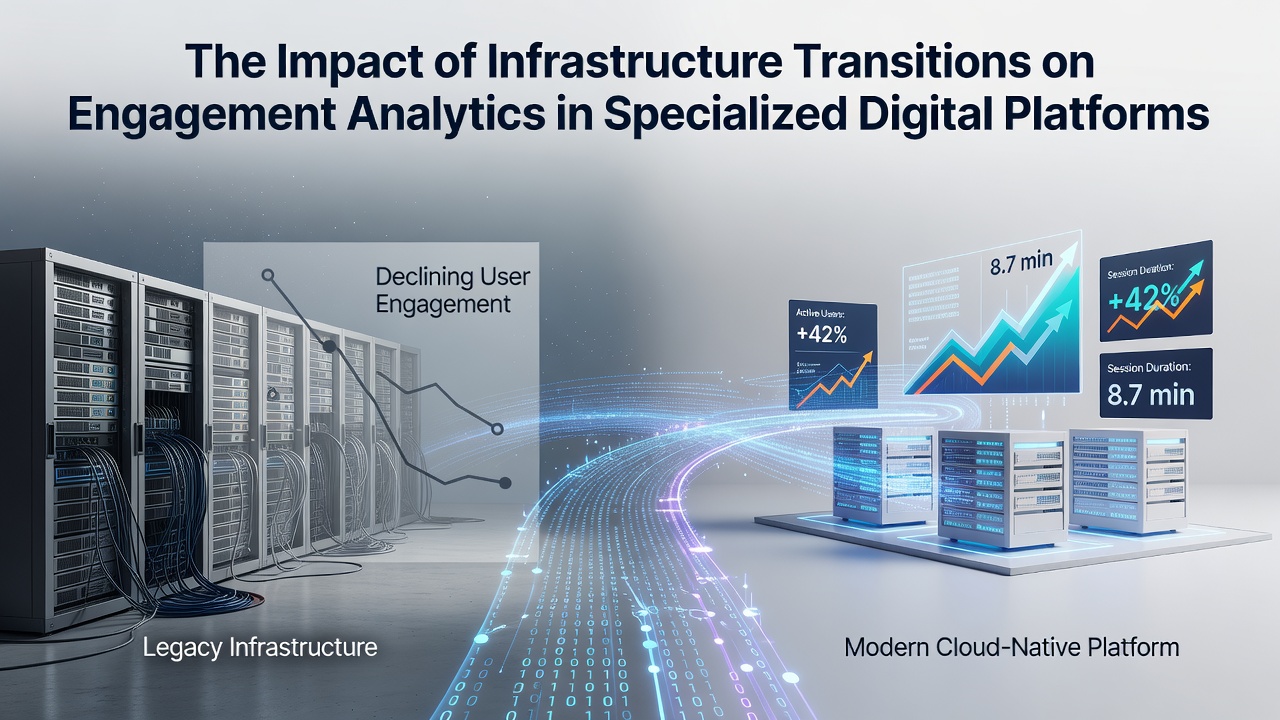
Specialized digital platforms undergo infrastructure transitions when organizations shift servers, databases, content delivery networks or cloud architectures, and these changes directly alter how engagement analytics capture user interactions such as clicks, session lengths and content shares. Data collection pipelines often experience interruptions or recalibrations during such moves because legacy tracking scripts require updates to match new endpoint structures while real-time metrics continue to feed into dashboards that stakeholders rely upon for operational decisions.
Core Components of Infrastructure Transitions
Transitions typically involve migration from on-premise hardware to distributed cloud environments or from monolithic applications to microservices frameworks, and each step modifies the latency profiles that influence recorded engagement rates. Observers note that platforms handling niche communities, including educational forums and professional networks, face particular scrutiny because smaller user bases make statistical anomalies more visible when measurement systems recalibrate. Research from the National Institute of Standards and Technology indicates that organizations completing full cloud migrations between 2024 and 2025 reported average increases of 12 percent in page-load variance during the first 90 days post-transition, a factor that subsequently affected bounce-rate calculations across multiple analytics suites.
Database schema updates form another frequent element of these projects because new architectures often store session identifiers differently, which means historical engagement baselines become harder to compare directly with post-migration figures. Analysts therefore implement parallel tracking periods that run both old and new collection methods simultaneously to establish continuity coefficients before retiring legacy systems entirely.
Direct Effects on Engagement Data Accuracy
Engagement analytics depend on consistent event logging, yet infrastructure transitions frequently introduce gaps when API endpoints shift or authentication layers change without corresponding updates to tracking libraries. Studies conducted by academic teams at the University of Melbourne have documented how even brief outages lasting under five minutes can produce permanent underreporting of peak-hour interactions in platforms that serve time-sensitive content such as live webinars or collaborative documents. Those gaps compound when content delivery networks reroute traffic through new geographic nodes, because regional user behavior patterns then appear distorted until algorithms relearn baseline distributions.
Specialized platforms that incorporate custom event schemas encounter additional complexity because proprietary metrics, such as depth-of-scroll on technical documentation or repeat-view counts for gated resources, require manual reconfiguration after each architectural update. Data shows that teams which delay these reconfigurations by more than two weeks experience measurable divergence between automated reports and manually verified activity logs.
Measurement Adjustments During Migration Windows
Teams managing transitions often deploy synthetic monitoring alongside production analytics to isolate whether observed drops in engagement stem from user behavior shifts or from instrumentation changes alone. This dual-tracking approach allows engineers to validate that new data pipelines register events at the same frequency and granularity as their predecessors before full cutover occurs. In September 2026 several mid-sized platforms plan coordinated migrations timed after major browser vendors finalize updates to third-party cookie handling, a scheduling decision that reflects awareness of compounding variables that could otherwise obscure true engagement trends.
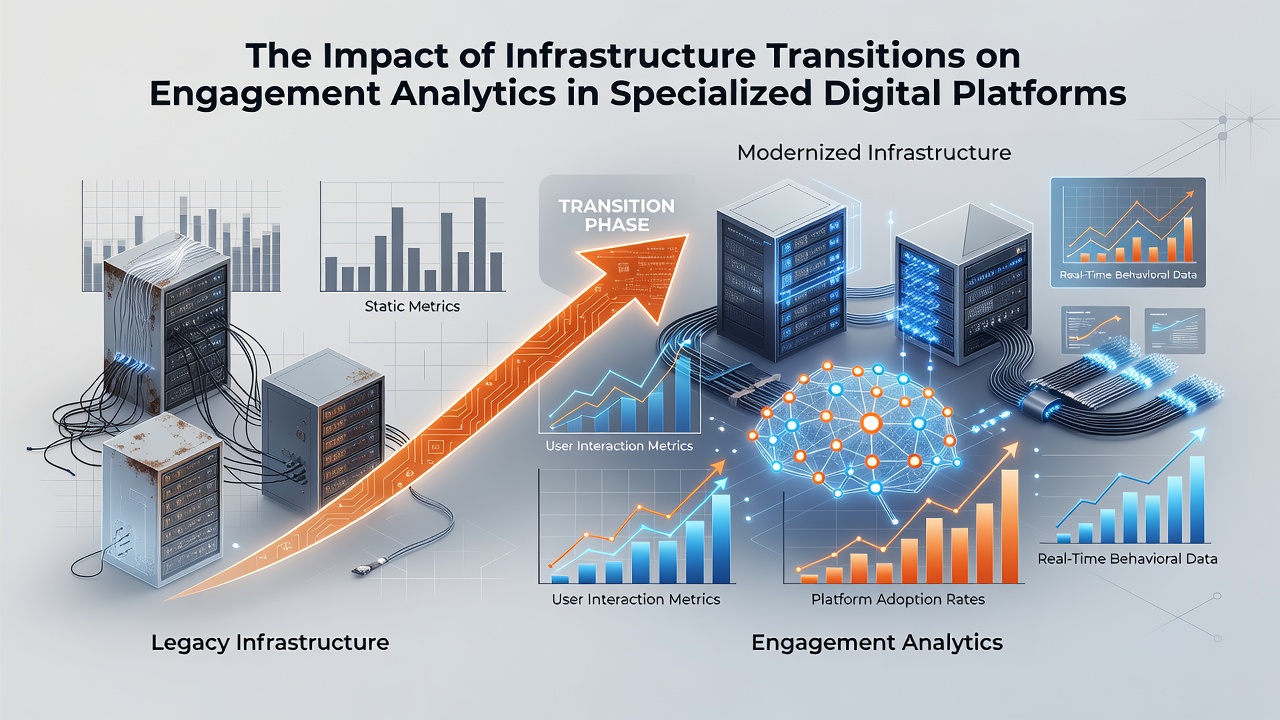
European Commission digital transformation reports highlight that organizations using container orchestration during migrations maintained higher continuity in event-stream integrity compared with those relying on lift-and-shift strategies, primarily because containerized environments preserve environment variables that analytics scripts depend upon. The difference appears most pronounced in platforms that track micro-interactions such as hover durations or keystroke patterns within specialized productivity tools.
Long-Term Implications for Platform Operators
Once infrastructure stabilizes, operators frequently discover that engagement baselines have shifted permanently because improved latency or new interface pathways encourage different usage patterns. Longitudinal analyses from the Australian Bureau of Statistics on digital service adoption demonstrate that platforms completing infrastructure modernization between 2023 and 2025 recorded sustained increases in average session depth, yet the magnitude varied according to how thoroughly analytics teams recalibrated attribution models after migration. Without such recalibration, reported engagement can appear artificially inflated or deflated for several quarters.
Specialized platforms therefore incorporate version-controlled analytics configurations that travel alongside infrastructure code, ensuring that metric definitions remain synchronized with each architectural iteration. This practice reduces the risk of silent data drift that otherwise forces analysts to reconstruct historical context from incomplete logs.
Conclusion
Infrastructure transitions reshape the technical foundation upon which engagement analytics rest, requiring deliberate alignment between system architecture and measurement frameworks to preserve data integrity. Organizations that treat analytics recalibration as an integral component of migration planning rather than a post hoc exercise achieve more reliable continuity in their performance indicators. As platforms continue evolving toward distributed and containerized environments, the relationship between infrastructure choices and observable engagement patterns will remain a central consideration for accurate reporting and strategic decision-making.